


 Talk to Us
 Chat with a Real Person
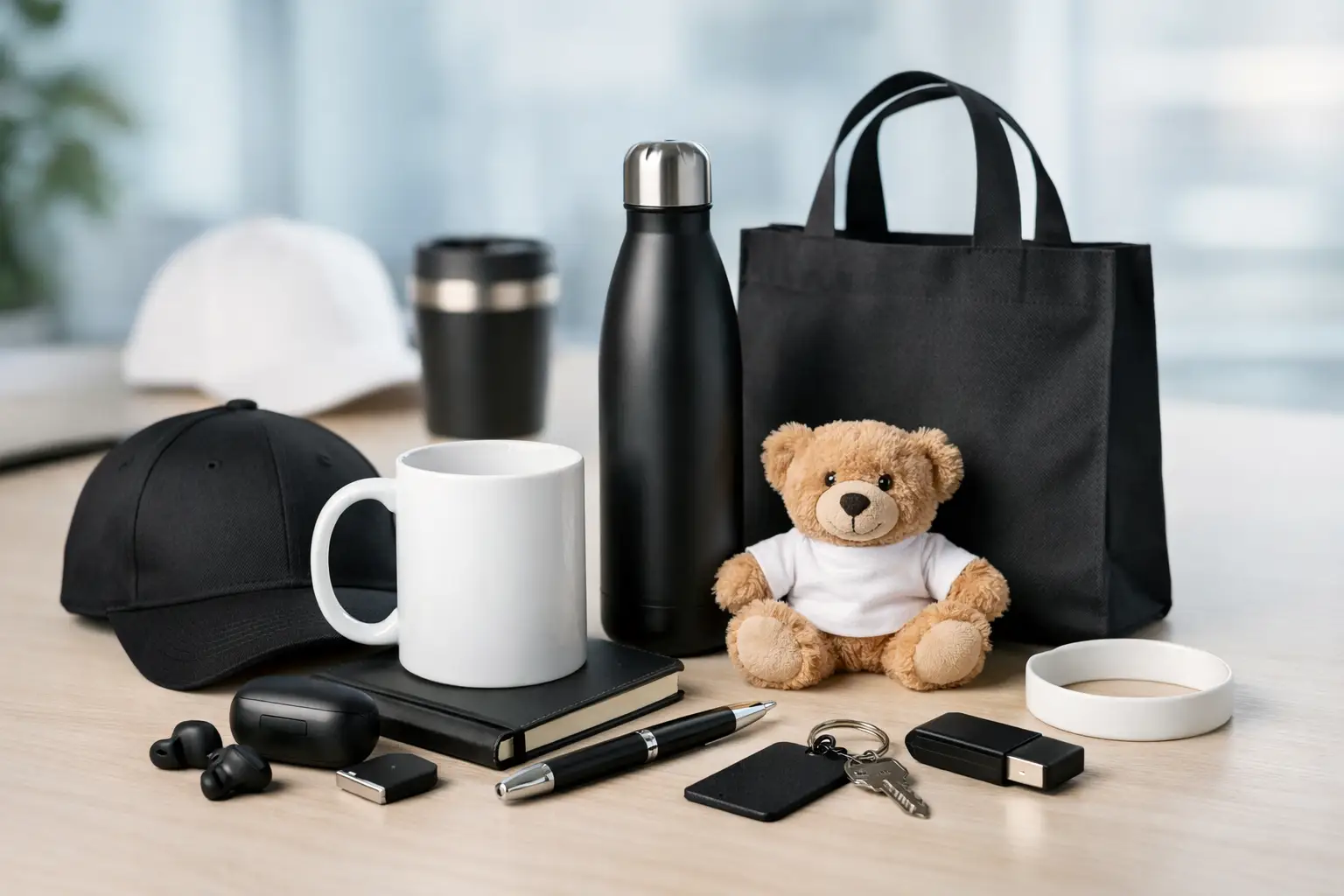
A stack of business cards can explain what you do. A branded mug on someone’s desk keeps reminding them who you are. That difference gets to the heart of what is promotional merchandise and why so many businesses, schools, teams, and event organizers use it to stay visible.
Promotional merchandise is any physical product branded with a company name, logo, slogan, or message and given away or sold to support marketing, awareness, or loyalty. It can be as simple as a pen or sticker, or as practical as a hoodie, water bottle, tote bag, or tumbler. The goal is straightforward: put your brand on useful items people keep, carry, wear, or use repeatedly.
Unlike a digital ad that disappears with one scroll, promotional merchandise has a longer shelf life. A cap worn at a community event, a custom polo used by staff, or a branded notebook handed out at a trade show keeps working after the first interaction. That’s why it remains a dependable option for businesses that want visibility without overcomplicating the process.
What Is Promotional Merchandise in Practice?
In practice, promotional merchandise sits at the intersection of branding and utility. You take an everyday product and customize it with your logo, artwork, campaign message, or business information. Then you use it to promote your brand in a real-world setting.
That can mean giving away custom mugs to clients, ordering branded shirts for employees, printing tote bags for a fundraiser, or creating event giveaways for a product launch. The item itself matters, but the use case matters just as much. A well-chosen product becomes a practical reminder of your brand rather than a throwaway freebie.
This is also where promotional merchandise differs from general merchandise. General merchandise may be sold as inventory with no branding purpose beyond the item itself. Promotional merchandise is tied to recognition, recall, and brand exposure. Even when it is sold rather than given away, it still serves a marketing role.
Why Businesses Use Promotional Merchandise
Most buyers are not looking for theory. They want to know whether it works and whether it is worth the budget. Promotional merchandise is popular because it solves a few common business needs at once.
First, it helps people remember your brand. Repetition matters in marketing, and branded products create repeated exposure without requiring ongoing ad spend. A customer may see your logo every morning on a coffee tumbler or every week on a reusable bag.
Second, it adds credibility. When a business has coordinated apparel, printed handouts, event signage, and branded giveaways, it looks organized and established. That matters for small businesses trying to make a strong impression as much as it does for larger organizations managing public-facing events.
Third, it can support relationships. A branded item given to employees, customers, volunteers, or donors can feel more personal than another email. It shows effort, especially when the product is useful and well matched to the audience.
There is a trade-off, though. Promotional merchandise is not automatically effective just because a logo is printed on it. If the item is low quality, poorly designed, or irrelevant to the audience, it can be ignored. The value comes from choosing products people actually want to use.
Common Types of Promotional Merchandise
The category is broad, which is one reason it works for so many use cases. Apparel is one of the most visible options. Custom t-shirts, hoodies, polos, jackets, and caps turn staff, supporters, or customers into moving brand exposure.
Drinkware is another strong performer because it tends to stay in use. Mugs, bottles, tumblers, and coasters fit offices, schools, gyms, welcome kits, and giveaways. Bags also do well because they are practical and reusable, especially for events, retail, and community programs.
Then there are classic handout items like pens, notebooks, stickers, and office stationery. These are simple, cost-effective, and easy to distribute in volume. They are especially useful when you need reach more than premium presentation.
Some businesses also combine promotional merchandise with print products and signage. For example, an event setup might include branded shirts for staff, vinyl banners for visibility, brochures for information, and giveaway mugs for follow-up recall. When those pieces work together, the brand feels more consistent.
How Promotional Merchandise Supports Different Goals
Not every order is trying to do the same job. That is why the right product depends on the goal.
For trade shows and expos, businesses usually want high visibility and easy distribution. Smaller items like tote bags, pens, stickers, and drinkware often make sense because they are practical to hand out and easy for visitors to carry.
For employee onboarding, internal culture, or team identity, apparel and desk items are often a better fit. A branded hoodie, notebook, or bottle can make a new hire package feel more complete and useful.
For customer retention or thank-you gifts, perceived value matters more. A better-quality tumbler or custom apparel item will usually make a stronger impression than a low-cost giveaway. The quantity may be smaller, but the impact can be higher.
For retail resale or branded merch programs, design matters just as much as branding. If you want people to buy and wear your merchandise, the product needs to feel like something they would choose even without the logo. Sometimes a subtle imprint works better than a large front-and-center mark.
How to Choose the Right Promotional Merchandise
Start with the audience, not the product. A school event, construction company, coffee shop, nonprofit, and startup may all use promotional merchandise, but they should not all order the same item.
Think about where the product will be used, how long it will last, and whether the recipient would choose to keep it. Useful items tend to outperform novelty items because they create repeated contact with your brand. That is why apparel, bags, drinkware, and office products remain popular year after year.
Budget matters too, but the cheapest option is not always the best value. If a product is discarded quickly, even a low unit cost can be wasted spend. A slightly better item that people use for months may deliver better return.
Customization also needs attention. Your logo should fit the product well, remain readable, and suit the material and print method. A design that looks great on a laptop sticker may not translate well to embroidered caps or small promotional pens. Mockups help catch that before ordering.
If you need flexibility, it helps to work with a supplier that offers a wide product range, no order minimums, and an easy online design process. That gives small businesses and one-off buyers room to test ideas without committing to large quantities, while still supporting bigger campaigns when needed.
What Makes Promotional Merchandise Effective?
Useful products, clear branding, and timing. Those three factors do most of the heavy lifting.
Usefulness gives the item a reason to stay around. Clear branding makes sure the user knows who it came from. Timing connects the product to a real need or moment, such as a conference, grand opening, fundraiser, hiring push, or seasonal campaign.
Good promotional merchandise also feels intentional. A branded water bottle for a fitness event makes sense. A custom notebook for a training session makes sense. When the item matches the context, it feels less like filler and more like a smart extension of the brand.
That said, effectiveness depends on expectations. Promotional merchandise will not replace a full marketing strategy, and it should not carry every campaign on its own. What it does well is support awareness, improve recall, and add a practical brand touchpoint that digital marketing alone cannot provide.
Is Promotional Merchandise Worth It for Small Businesses?
Usually, yes, especially when the order is targeted. Small businesses often need marketing tools that are affordable, flexible, and visible. Promotional merchandise can check all three boxes.
A local business can use branded apparel to create a more professional team appearance. An event vendor can hand out stickers or bags that keep the name circulating after the event. A service business can leave behind useful branded items that keep contact details close at hand.
The key is to avoid ordering products just because they are common. Order them because they fit your audience and purpose. A small, smart run of relevant products often does more than a large order of generic giveaways.
For buyers who want convenience, having access to apparel, promo products, print materials, and signage in one place can make the process much easier. Mapleimprint serves that need by letting customers customize products online, upload artwork, review mockups, and order without juggling multiple vendors.
Promotional merchandise works best when it is practical, well branded, and easy to put into action. If the item fits your audience and gives them a reason to keep using it, your brand gets another chance to be seen long after the handoff. That is a simple advantage, and for many businesses, it is exactly the kind of marketing that keeps paying off.