


 Talk to Us
 Chat with a Real Person
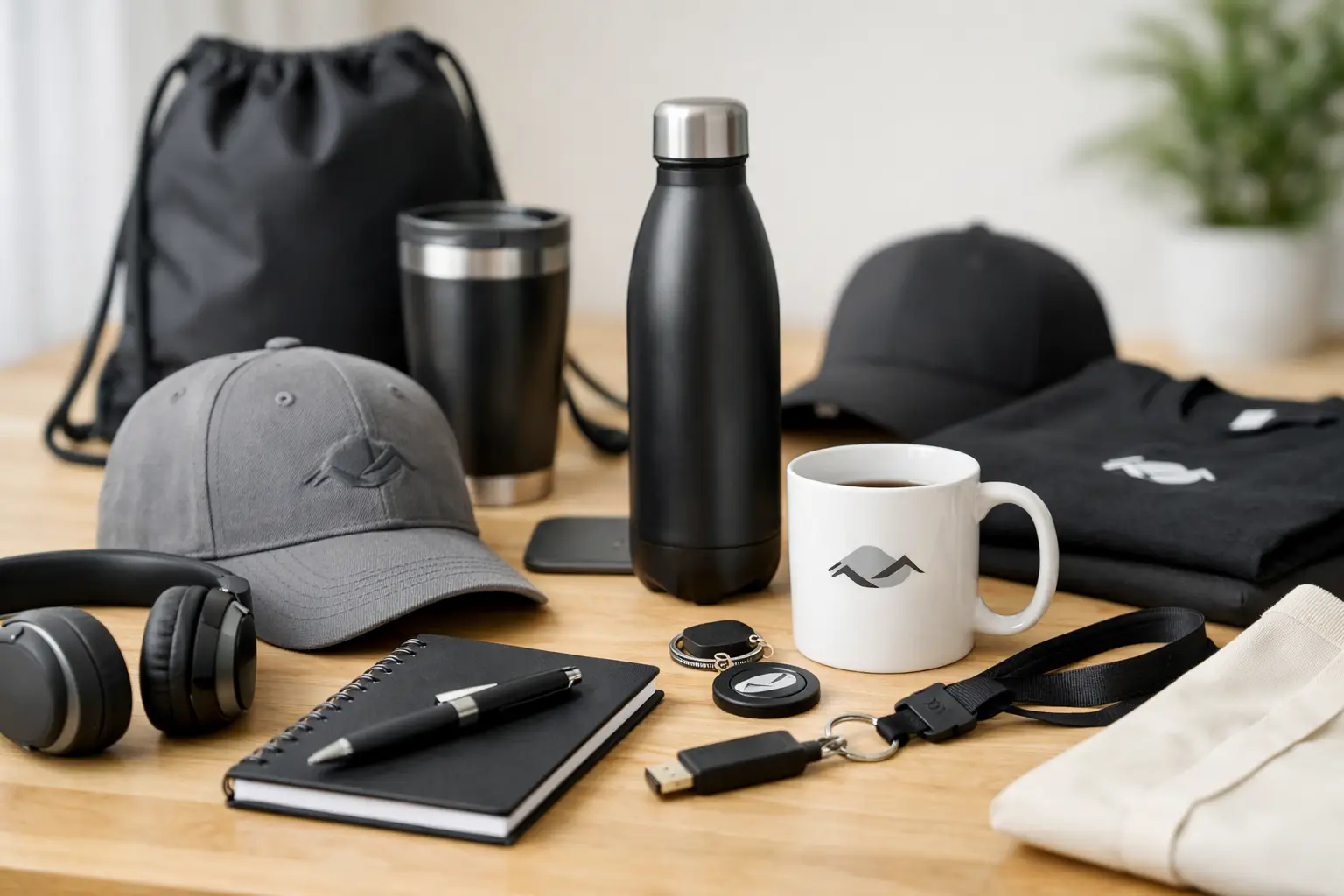
A box of cheap promo items that nobody keeps is not a branding strategy. The best branded merchandise examples earn their place in someone’s day – at work, on the road, at events, or at home. When the item is useful, well-timed, and clearly branded, it keeps your business visible long after the first handoff.
That matters whether you are ordering for a trade show, outfitting staff, opening a new location, running a school fundraiser, or building a more polished customer experience. Good merchandise is not about adding your logo to anything available. It is about choosing products that fit how your audience actually lives and works.
What makes branded merchandise worth buying?
Useful beats clever most of the time. A mug on a desk, a hoodie on a team member, or a vinyl banner at a local event does more for visibility than a novelty item that gets tossed in a drawer. The strongest products usually do one of three jobs well: they make your team look consistent, they keep your name in front of customers, or they support a specific promotion or event.
Budget matters too, but low cost is not the same as good value. A lower-priced item can work well for high-volume giveaways, while a more durable item makes sense for staff kits, VIP gifts, and loyal customers. It depends on who is receiving it and how long you want it to stay in use.
15 branded merchandise examples for real-world use
1. Custom t-shirts
T-shirts are one of the most reliable branded merchandise examples because they work across industries. Restaurants, contractors, schools, gyms, nonprofits, and event teams all use them. They are visible, practical, and easy to size for different groups.
They work especially well for staff uniforms, event volunteers, community campaigns, and product launches. The trade-off is that design matters more here than on many other items. If the shirt looks too promotional, people may only wear it once.
2. Hoodies and sweatshirts
When you want merchandise with a longer lifespan, hoodies usually outperform lighter apparel. People keep them, wear them casually, and use them across seasons. That gives your brand more repeated exposure.
They cost more than t-shirts, so they are better suited for employee apparel, school clubs, sports teams, and higher-value customer gifts than mass handouts.
3. Polos and branded workwear
Polos, jackets, and other staff apparel help businesses look organized without feeling overly formal. For service businesses, retail teams, and front-desk staff, branded workwear builds trust fast. Customers can tell who works there, and the business feels established.
This is one category where durability and fit matter a lot. Saving a few dollars upfront is rarely worth it if the apparel fades quickly or employees avoid wearing it.
4. Caps and hats
Caps are practical, easy to hand out, and useful for teams that work outdoors or attend events. They also avoid some of the sizing issues that come with shirts and jackets.
The catch is logo placement. A clean front embroidery area usually works better than trying to squeeze in too much messaging. Simple branding tends to get worn more often.
5. Tote bags and drawstring bags
Bags are strong promotional tools because they move around. A tote used for errands, conferences, school supplies, or daily commuting gives your logo visibility in multiple settings.
These are especially effective for event giveaways, retail packaging upgrades, and welcome kits. If your audience is likely to carry materials, samples, or paperwork, a bag pulls more weight than a throwaway freebie.
6. Mugs
A mug stays put where brand exposure is valuable – on desks, in offices, at home kitchens, and in break rooms. For many businesses, mugs are a better long-term item than low-cost impulse giveaways because they become part of a routine.
They are a natural fit for employee gifts, client thank-yous, and online merchandise shops. Design should stay readable and clean, since mugs are looked at up close.
7. Tumblers and water bottles
Drinkware has become one of the most practical branded merchandise examples for modern teams and event audiences. People bring tumblers to work, keep bottles in cars, and carry them to gyms and schools.
This category works well when you want a more premium feel without moving into high-end gifting. It is also a smart choice for wellness programs, staff onboarding, and conference kits.
8. Coasters
Coasters are smaller and often overlooked, but they can work well in hospitality, real estate, breweries, cafés, and office gifting. They pair easily with mugs, drinkware, or desk sets and give your branding a clean, polished touch.
They are less universal than apparel, so they usually perform best as part of a bundle rather than a standalone giveaway.
9. Stickers
Stickers are low-cost, easy to distribute, and useful when you want volume. They work for creators, schools, clubs, local events, cafés, and brands with a casual or youth-focused audience.
Not every business needs stickers, though. If your brand is more corporate or service-based, they may still work inside packaging or as a small add-on, but they are rarely the main merchandise item.
10. Business cards with matching branded materials
Business cards are not usually called merchandise first, but they absolutely belong in the conversation when you are building a complete brand presence. A business card handed over with a brochure, flyer, or sticker creates a more consistent impression than any single item alone.
This matters most for local service businesses, sales teams, and networking-heavy industries. If people meet your team in person, printed brand materials still do practical work.
11. Brochures and handouts for events
For trade shows, open houses, school admissions, community outreach, and local promotions, brochures and printed handouts support merchandise instead of competing with it. A branded bag filled with useful print pieces often performs better than random giveaway items with no clear next step.
The key is to keep the message simple. Merchandise gets attention, but printed collateral helps people remember what you actually offer.
12. Posters and vinyl banners
Large-format print is not take-home merchandise, but it is part of branded visibility in a very direct way. Posters and banners help your booth, storefront, table, or event setup look intentional. They make smaller merchandise items feel connected to a real brand presence.
This is especially useful when you are launching, recruiting, fundraising, or promoting a time-sensitive event. Visibility at the moment matters just as much as what people carry away.
13. Office stationery
Branded notepads, letterheads, folders, and desk materials are practical for internal use and polished enough for client-facing settings. They reinforce consistency in offices, schools, clinics, and service businesses that still rely on paperwork or leave-behind materials.
Stationery is not flashy, but that is part of its value. It helps a business look prepared and established without trying too hard.
14. Plaques and recognition items
Recognition products are a different kind of branded merchandise, but they can be effective for employee awards, school achievements, sponsor thank-yous, and corporate milestones. They are not mass-distribution products. They are symbolic items that carry emotional value.
Because of that, quality matters more than quantity. A well-presented plaque does more for goodwill than a stack of generic gifts.
15. Mixed welcome kits
Sometimes the best option is not one item. A small branded kit with apparel, drinkware, print materials, and a few practical extras can work better for onboarding, conferences, remote teams, and client appreciation. It gives you flexibility across budgets and audiences.
This approach is also efficient when you want everything to match. Ordering from one source can save time, avoid inconsistent branding, and make approval easier for busy teams.
How to choose the right branded merchandise examples
Start with the use case, not the product catalog. If your main goal is staff presentation, apparel and workwear make sense. If you need event traffic and take-home value, bags, drinkware, and print materials are stronger choices. If you are trying to stay visible in offices, mugs, stationery, and desk-friendly items usually last longer.
Then think about quantity and audience. No-minimum ordering is useful when you need one branded jacket, a short run of shirts, or a small batch of custom mugs. Larger orders make more sense when you are preparing for trade shows, school events, retail promotions, or company-wide rollout.
Design should stay practical. A clean logo, readable text, and product-appropriate artwork almost always perform better than trying to force too much information onto one item. And if you need several categories at once – apparel, signage, promo items, and print – using one provider can simplify the whole process.
That is where a company like Mapleimprint can make things easier. Being able to customize apparel, merchandise, and print products in one place saves time and keeps your branding consistent from your team shirts to your event handouts.
The smartest merchandise choice is usually the one people will actually use next week, not the one that looked exciting in a spreadsheet. Pick items that fit the job, keep the branding clean, and make it easy for your audience to remember who gave them something worth keeping.